UI/UX DesignMay 21, 2026
Designing Enterprise SaaS Dashboards for the Middle East
H
Hamrix Editorial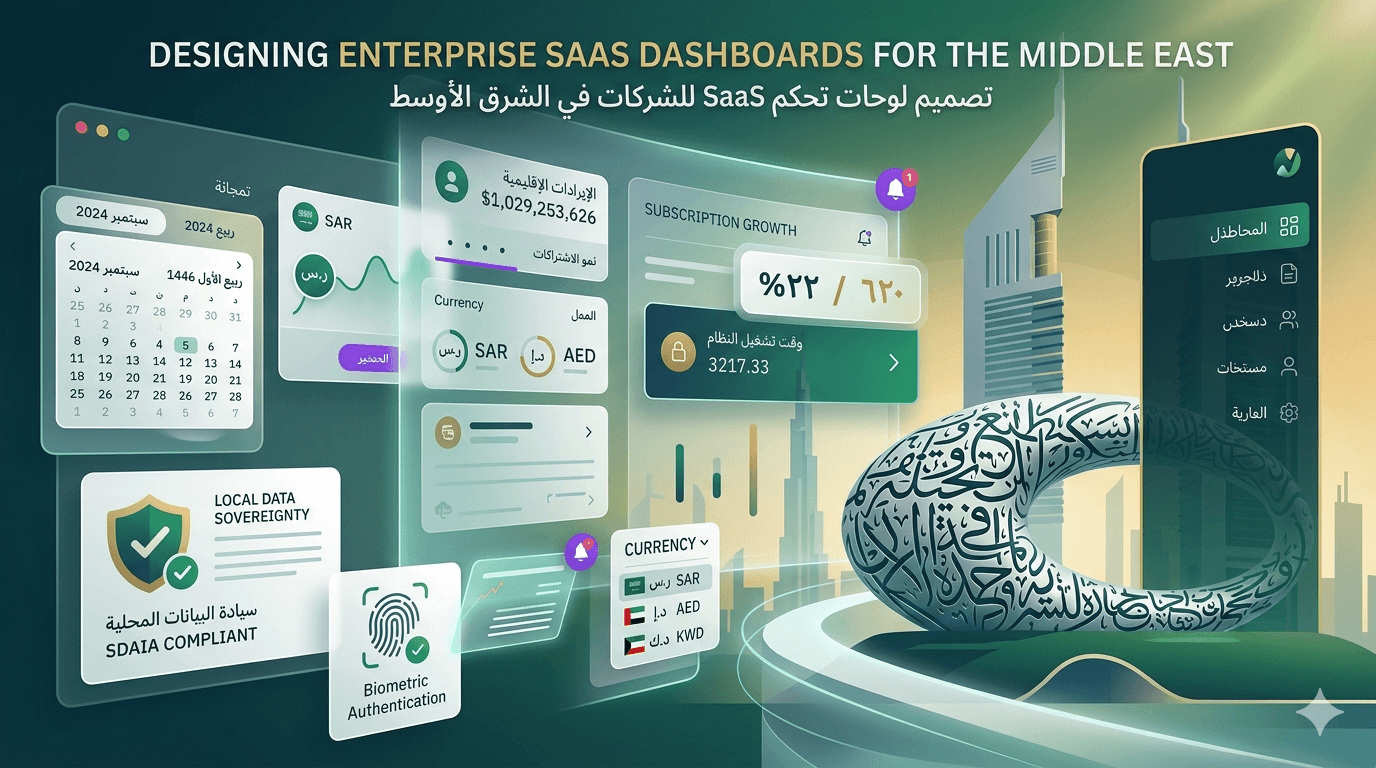

While consumer-facing applications often dominate the design discourse with flashy animations and aggressive marketing, the true backbone of the UAE's digital economy runs on enterprise Software-as-a-Service (SaaS) platforms. From massive logistics networks operating out of Jebel Ali to multinational financial institutions headquartered in the DIFC, enterprise software manages billions of dollars and millions of man-hours daily. Consequently, the demand for highly functional SaaS UI design Dubai has never been higher.
Designing for the enterprise is fundamentally different from designing for the consumer. In this comprehensive guide, we unpack the rigorous UX design principles required to build data-dense, highly efficient, and bilingual SaaS dashboards tailored specifically for corporate users in the Middle East.
Consumer apps are designed for intermittent, short-burst engagement—ordering food, checking a bank balance, or scrolling a feed. In contrast, enterprise SaaS users spend four to eight hours inside your application every single day. Their primary requirement is not visual entertainment; it is workflow efficiency, task completion speed, and data accuracy.

Designing data-dense tables that display thousands of rows without crashing the browser, building complex multi-parameter filtering systems, and creating customizable reporting modules requires a deep, empathetic understanding of the user's daily workflow. As a premier UI UX design company, we prioritize functional clarity and cognitive ease over superficial visual flair when engineering enterprise tools.
The most common failure point in SaaS design is poor information architecture (IA). When users cannot find the module they need, or when critical data is hidden behind too many clicks, productivity drops and frustration spikes.
Data tables are the lifeblood of any SaaS dashboard. In a corporate environment, users need to parse massive amounts of information rapidly. A successful SaaS UI design Dubai strategy involves:
The UAE corporate environment is uniquely multicultural. A single SaaS platform might be used by an Arabic-speaking HR manager in Abu Dhabi and an English-speaking financial analyst in Dubai. Ensuring that the interface is fully and natively bilingual (Arabic/English) is not just a localization feature; it is a critical operational requirement.
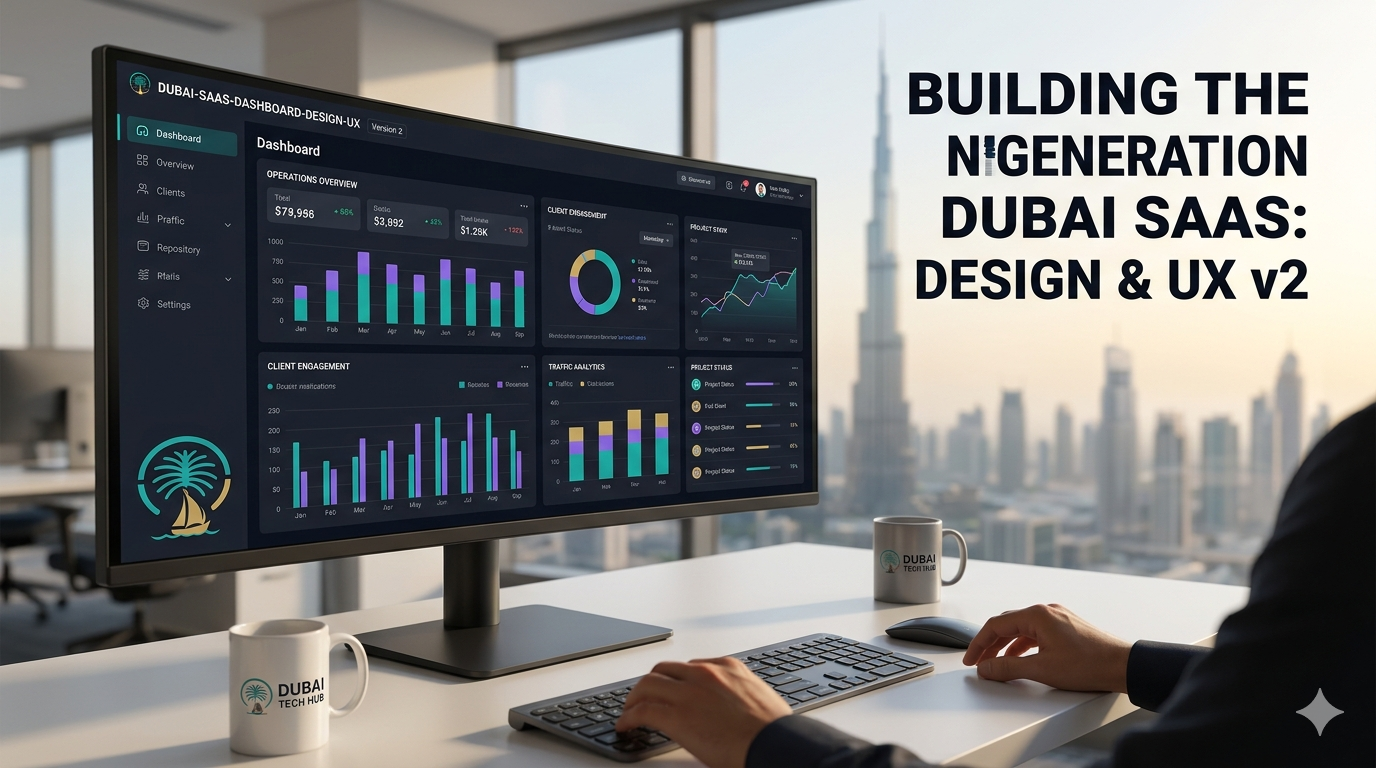
Implementing seamless Right-to-Left (RTL) support for complex dashboards is technically demanding. It requires a robust frontend architecture (often utilizing frameworks like Next.js or React) where layout orientation, icon directionality, and typographic scales shift instantly based on user preference. If you are investing in enterprise software development, bilingual architecture must be established at the foundation, not bolted on post-launch.
In enterprise software, Web Content Accessibility Guidelines (WCAG) 2.1 AA compliance should be a non-negotiable standard. Large corporations and government entities in the UAE increasingly mandate accessibility compliance in their procurement processes.
Proper contrast ratios ensure that dashboards remain legible under harsh office lighting or on lower-quality corporate monitors. Full keyboard navigation is essential for power users who find mouse movement too slow for data entry. Screen reader compatibility ensures that visually impaired employees can operate the software effectively. Inclusivity in SaaS design directly expands your Total Addressable Market (TAM) in the B2B sector.
A poorly designed SaaS dashboard is a hidden tax on corporate productivity. It causes data entry errors, requires extensive training manuals, and leads to high employee churn. Conversely, an expertly engineered, intuitive dashboard empowers users, accelerates workflows, and provides clear, actionable data insights. When building SaaS products for the Middle East, rigorous UX design is your strongest competitive advantage.
Upgrade your enterprise software with a professional UX overhaul designed specifically for complex data and bilingual workflows.
Schedule a Consultation