Software ModernizationAugust 27, 2026
UAE IT Service Spending Is Growing Nearly 20% a Year Is Your Software Actually Keeping Up?
H
Hamrix Editorial
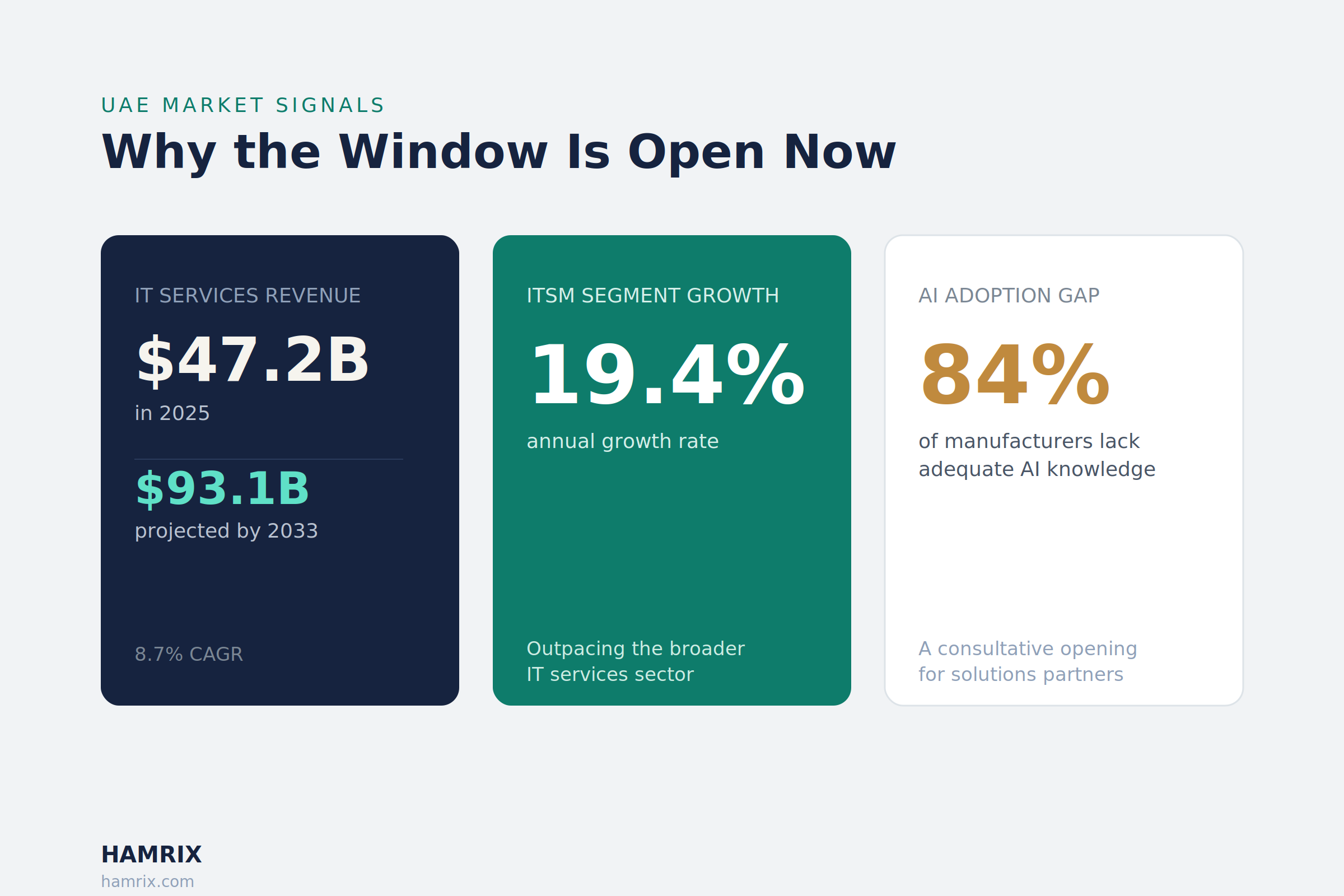
The UAE's IT service management market is growing at close to 19% a year, nearly double the pace of the broader IT services sector, which is itself expanding at roughly 8–9% annually toward tens of billions of dollars in value by the early 2030s. That gap matters: buyers across the UAE are moving fast from basic ticketing and manual processes toward full service automation and orchestration and a large share of the software running inside UAE businesses today wasn't built to support that shift. This piece looks at why the gap is opening, what it actually costs a business to ignore it, and how to close it without a disruptive "rip and replace."
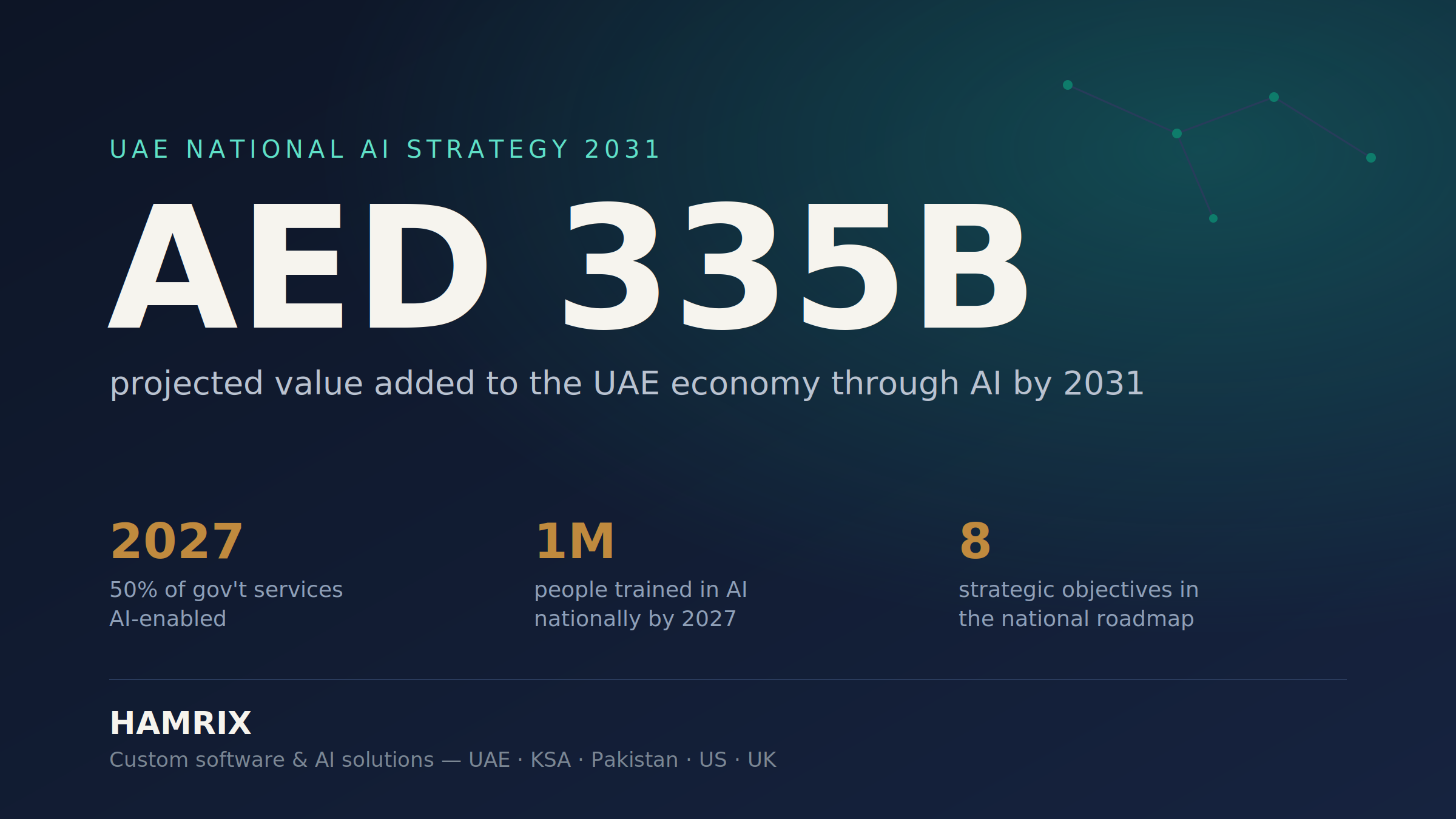
UAE IT services revenue was valued at roughly USD 47.2 billion in 2025, projected to nearly double by 2033. Within that broader market, IT service management the software and processes businesses use to run their operations is growing even faster, at close to 19.4% annually, as buyers move from basic ticketing solutions toward comprehensive automation. Drivers include the adoption of sovereign clouds, formalized digital government initiatives, and a clear preference for platforms that combine workflow automation with local hosting and compliance.
That growth rate isn't happening in a vacuum. It's a direct response to two forces pulling in the same direction: government-driven digitization targets, and private businesses discovering that manual, disconnected systems can no longer keep pace with customer expectations or compliance requirements.
Across UAE enterprises particularly in banking, healthcare, logistics, and government-adjacent sectors a substantial share of core operations still run on applications designed decades ago. These systems are difficult to integrate, expensive to maintain, slow to update, and generally unable to support cloud platforms, analytics, automation, or remote access. For technology leaders, that translates directly into rising technical debt: legacy estates rarely come from a single vendor, which is exactly where in-house teams tend to get stuck trying to modernize alone.
There's also a compounding problem specific to this moment: UAE enterprises are increasingly embracing AI-powered decision-making, but if business data is trapped in disconnected legacy applications, AI simply can't access it in a usable form. Modernized businesses are able to turn operational data into strategic insight. Businesses still running on legacy stacks are, by definition, unable to do the same regardless of how much they invest in AI tools layered on top.
Before reading further, copy this into ChatGPT, Claude, or Gemini and see what it surfaces about your own systems:
Use the answer as a starting checklist then compare it against what a modernization partner tells you, since the AI's answer won't know your specific compliance or integration constraints.
The common assumption is that modernization is expensive and risky, so postponing it is the safer choice. In practice, the opposite tends to be true. The costs of delay are just less visible month to month:
Modernization does require upfront investment, but it typically pays back through reduced maintenance costs, decreased operational inefficiency, and a foundation that can actually support the next five years of growth rather than fighting it.
Two broad paths exist once a business decides to modernize: build in-house (or with a retained vendor), or partner with an established provider to deliver all or part of the solution. The right choice depends on business maturity, risk appetite, and whether the business can realistically operate and maintain a modernization effort at scale internally.
Most mid-sized UAE businesses underestimate how much internal capacity a full in-house modernization effort requires not just to build, but to maintain afterward. A staged approach starting with a scoped MVP that unlocks one concrete piece of business value, rather than attempting a full-scale rebuild tends to produce faster, safer results and keeps budget and risk contained at each step.
If you're deciding whether this applies to your business, these are reasonable first questions to answer:
If more than one of these gives you pause, modernization isn't a "someday" project it's already overdue.
Does modernization mean replacing all our software at once?
No. A staged approach modernizing one high-impact system or workflow first is generally safer and more cost-effective than a full rip-and-replace, and is how most successful UAE modernization projects are structured.
How long does a typical modernization project take?
It varies by scope and complexity, but many phased projects deliver a first meaningful milestone within a few weeks to a few months, rather than requiring a multi-year commitment before seeing any value.
Is this only relevant to large enterprises?
No. While banks and large enterprises face the most complex legacy environments, mid-sized businesses in retail, logistics, and services face the same core problem outdated systems blocking automation and AI adoption often with fewer internal resources to address it alone.
What's the biggest risk in a modernization project?
Data migration risk, integration complexity across multiple existing vendors, and change management across departments are the most commonly cited risks all manageable with a phased, audited approach rather than a single large cutover.
Hamrix builds custom software and modernization solutions for businesses across the UAE, Saudi Arabia, Pakistan, the US, and the UK helping teams move off legacy systems without disrupting the operations that depend on them. If you're not sure whether your current software can actually support where your business is headed, that's worth a direct conversation before the gap gets more expensive to close.