Artificial IntelligenceSeptember 5, 2026
What Is AGI in AI? From GPT-6 Astra’s Launch to Agentic Workflows: The 2026 Shift Rewriting Software Engineering

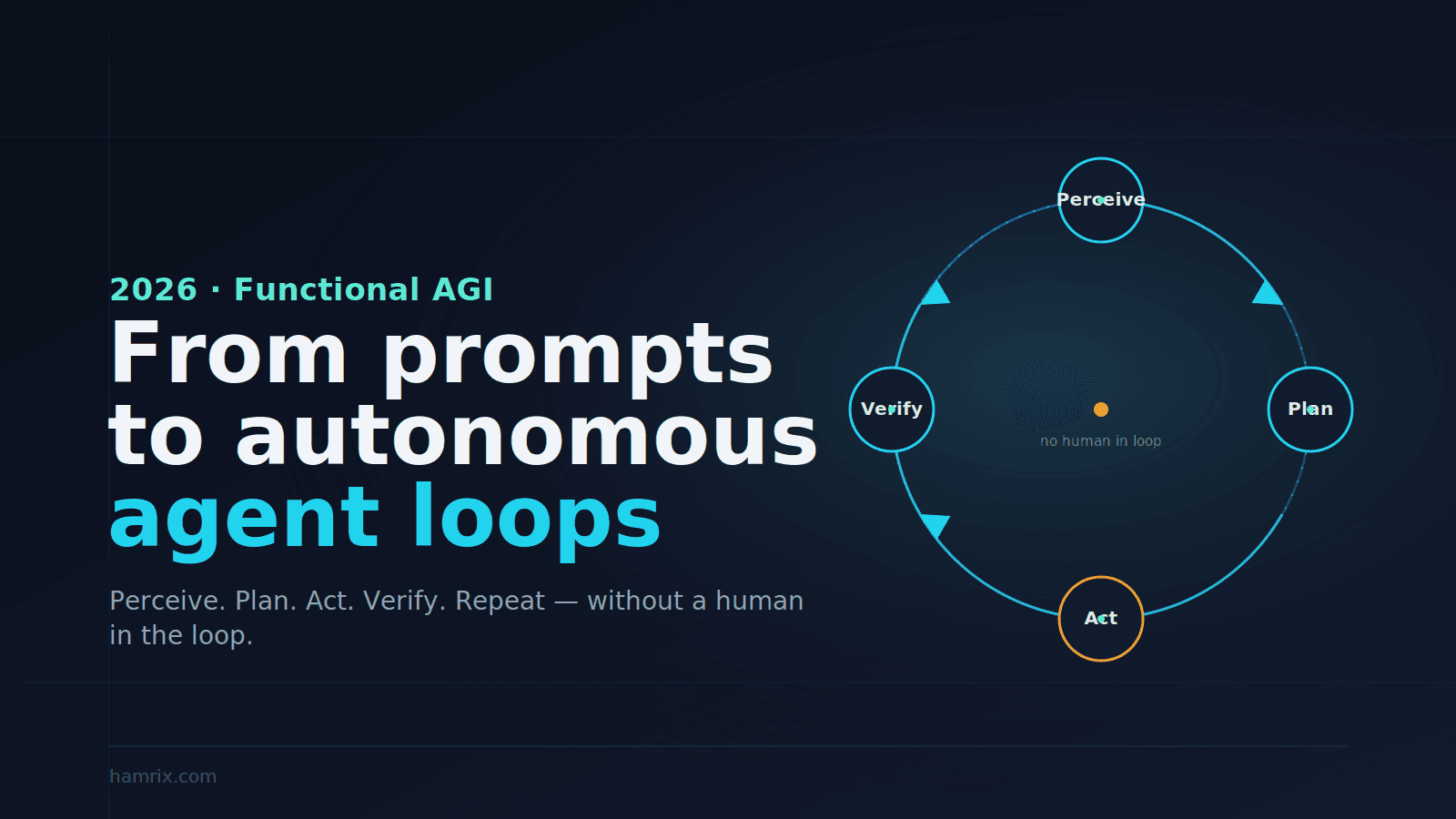

Imagine handing an AI system a prompt like: "Audit our web application for security vulnerabilities, patch the code, write the automated test suite, and deploy the updated container to production without human oversight."
Until recently, Large Language Models (LLMs) could only write isolated code snippets or suggest syntax. However, with landmark announcements like OpenAI's release of GPT-6 Astra—which saturated the ARC-AGI-3 benchmark with a 99.9% score—we have officially crossed the threshold from static text completion to true Artificial General Intelligence (AGI) capabilities.
Whether you manage an engineering team, build digital platforms, or track enterprise AI investments, understanding what is AGI in AI—and separating theoretical general intelligence from current market deployments—is critical in 2026.
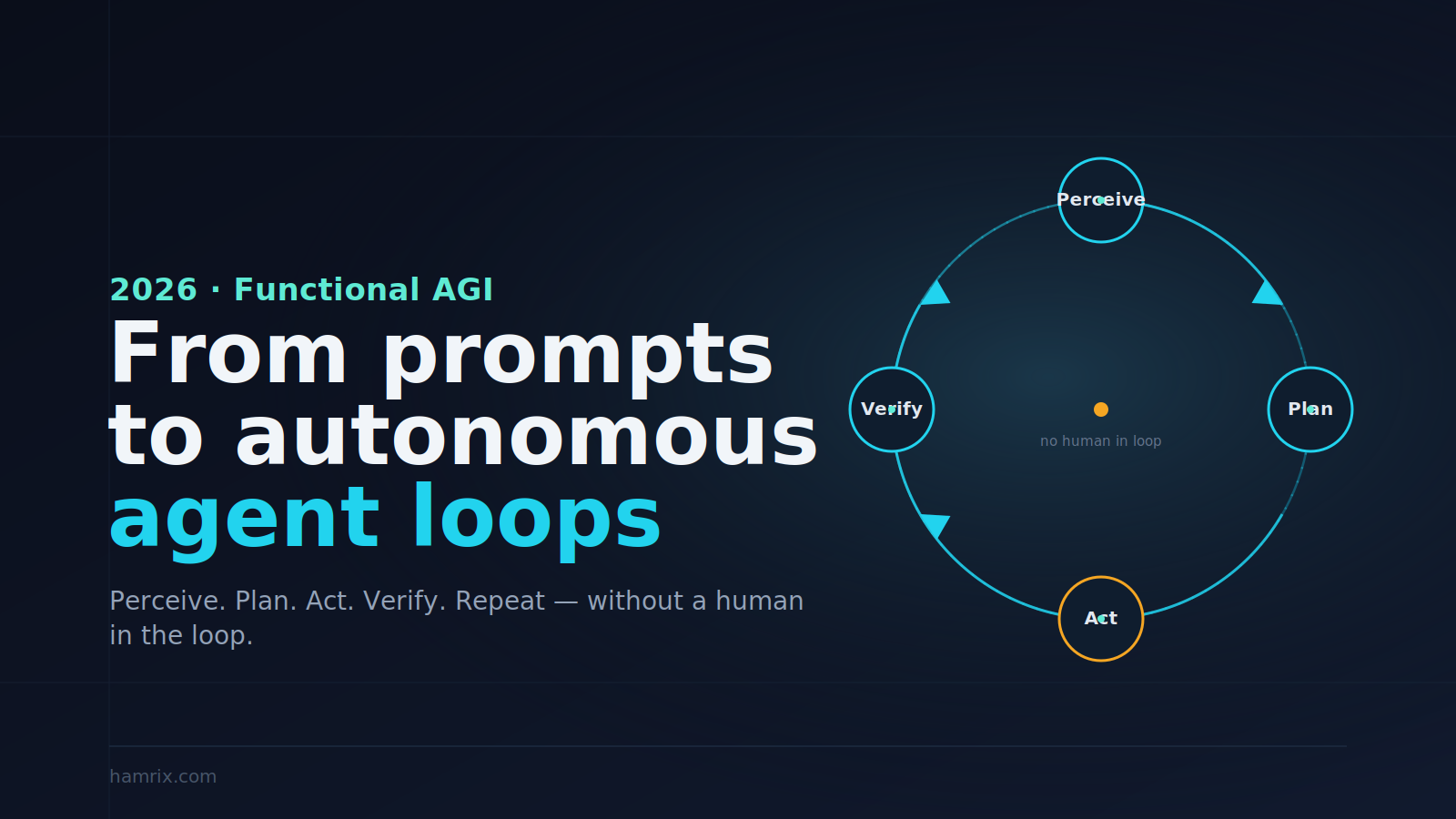
For decades, computer scientists defined AGI as a theoretical machine matching or surpassing human cognition across every domain ("Full AGI"). In late 2026, the technology landscape pivoted to a more immediate reality: Functional AGI.
Functional AGI refers to autonomous AI agents capable of cross-domain reasoning, multi-hour execution loops, self-healing code execution, and operating complex software tools without step-by-step human prompts. The launch of frontier models like GPT-6 Astra exemplifies this shift:
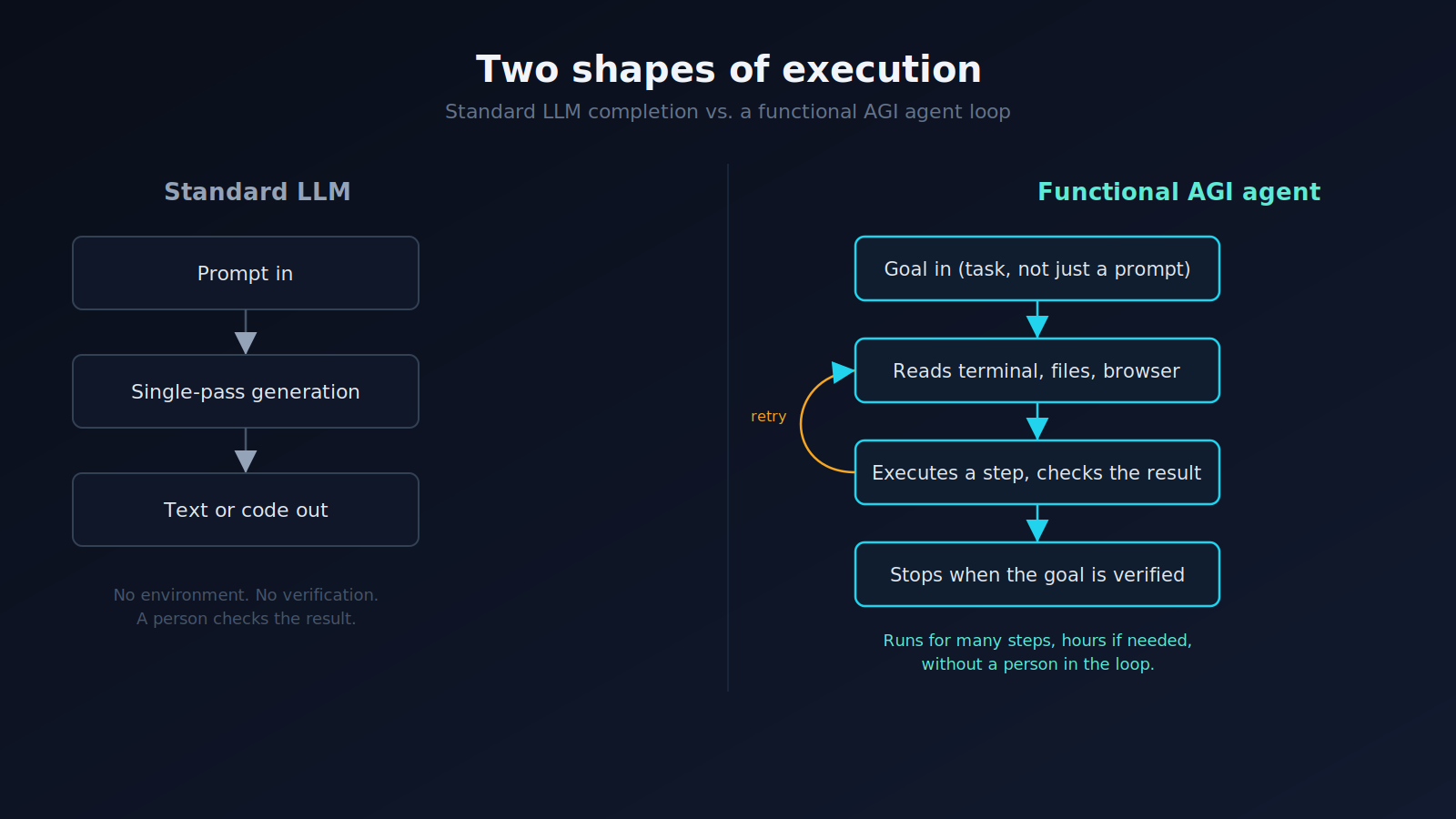
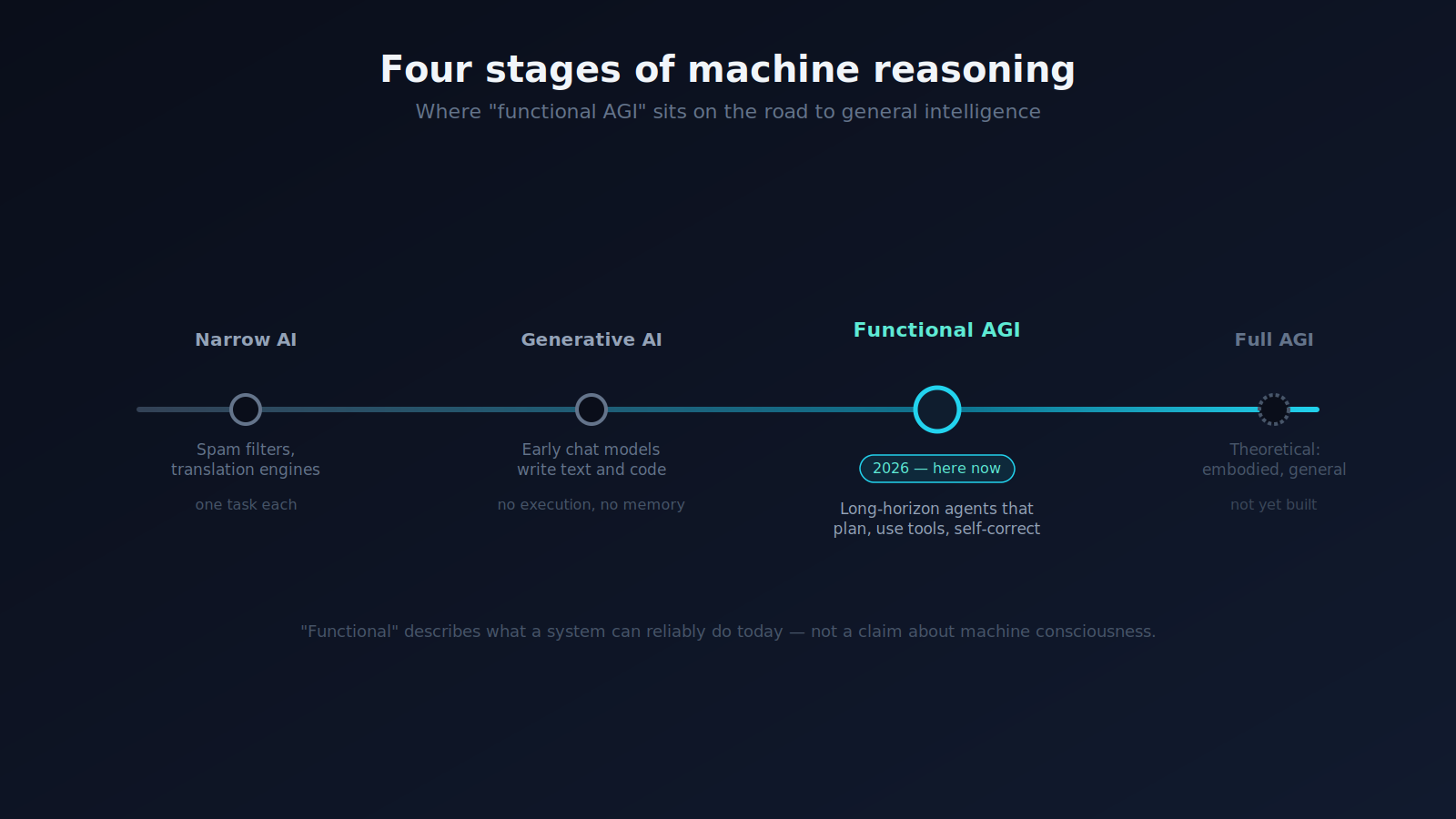
To understand why GPT-6 Astra and agentic workflows are generating massive industry buzz, it helps to look at the evolutionary steps of AI:
1. Narrow AI (ANI): Specialized models trained for narrow, specific tasks (such as spam detection or isolated translation engines).
2. Generative AI & Early LLMs: Pattern-matching systems (like early GPT-4 or Claude 3) capable of generating text and code based on prompt inputs, but constrained by context drift and lack of environment execution.
3. Functional AGI & Frontier Agents: Systems (led by GPT-6 Astra) capable of long-horizon planning, searching historical context windows, using terminal environments autonomously, and solving novel scientific or mathematical proofs.
4. Theoretical Full AGI: Universal artificial cognitive systems possessing human-equivalent emotional intelligence, physical domain transfer (embodied robotics), and unconstrained scientific synthesis.
The transition to agentic intelligence is accelerating rapidly across engineering organizations in the United States and global markets:
Rather than replacing human developers, functional AGI models like Astra redefine the role of the engineer. Instead of spending hours writing manual syntax, developers are moving up the stack to become system architects, security supervisors, and domain orchestrators.
Modern engineering teams are reshaping their workflows around three key shifts:
Autonomous Bug Fixing & Patching: Agents run directly inside CI/CD pipelines, automatically isolating runtime errors, generating bug patches, and verifying fix stability before raising pull requests.
Focus on System Architecture & Security: Because code generation is increasingly instant, engineering value centers on database design, API security, multi-region scaling, and user experience strategy.
Context-Preserving Coding Workflows: Rather than losing history during long debugging sessions, modern AGI harnesses retain searchable notes across context windows, preserving why specific architectural decisions were made.
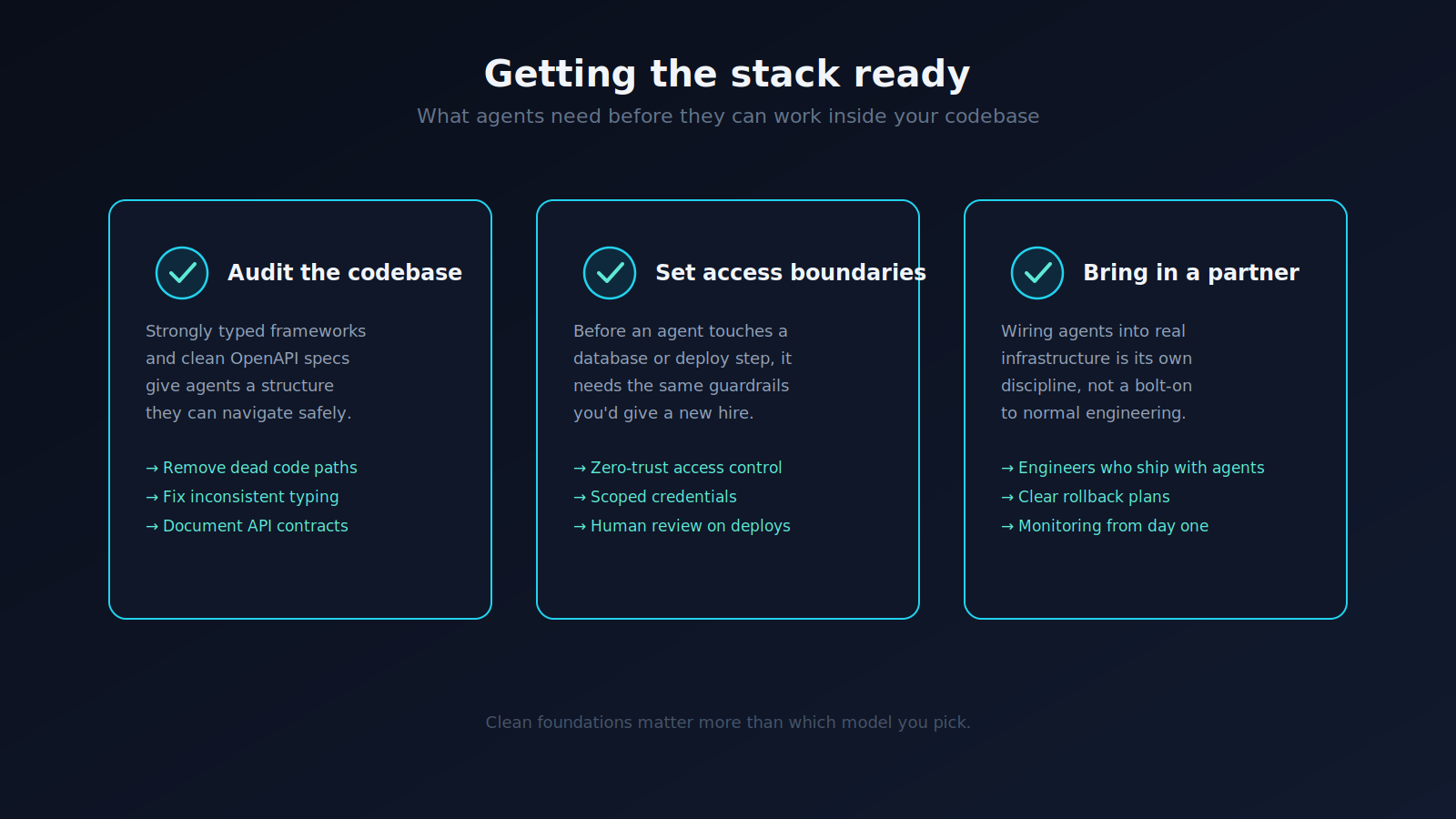
Preparing your enterprise for AGI-level performance does not require waiting for future breakthroughs. It requires building clean, modular software foundations right now:
1. Conduct a Software Architecture Audit: Autonomous AI agents excel when given structured codebases, strongly typed frameworks (like TypeScript and Next.js), and clean OpenAPI specs. Performing an upfront architecture audit helps eliminate technical debt that hampers AI tool execution.
2. Integrate Custom Generative AI & ML Workflows: Before granting AI agents access to internal databases or execution layers, implement structured AI/ML integration protocols and zero-trust access control. Tailoring solutions via targeted generative AI development ensures models remain strictly aligned with business requirements.
3. Work with AI-Native Engineering Partners: Building AI-ready systems requires specialized engineering. Whether you require scalable custom enterprise software, high-performance web development services, mobile apps built by an experienced mobile app development company, or strategic digital consulting, partnering with experienced developers ensures smooth integration.
Let's audit your technical infrastructure, build high-performance web applications, and integrate intelligent, automated workflows into your core product stack.
Schedule a Technical Consultation →
Full-Stack Developer with 3+ years of experience delivering SEO-ranked, high-performance web architectures and enterprise SaaS, FinTech & PropTech applications. Full-Stack Developer at Hamrix.
View Profile →