Digital MarketingAugust 15, 2026
You Don't Need 4 Different Agencies Anymore Here's What One Integrated Team Can Actually Do


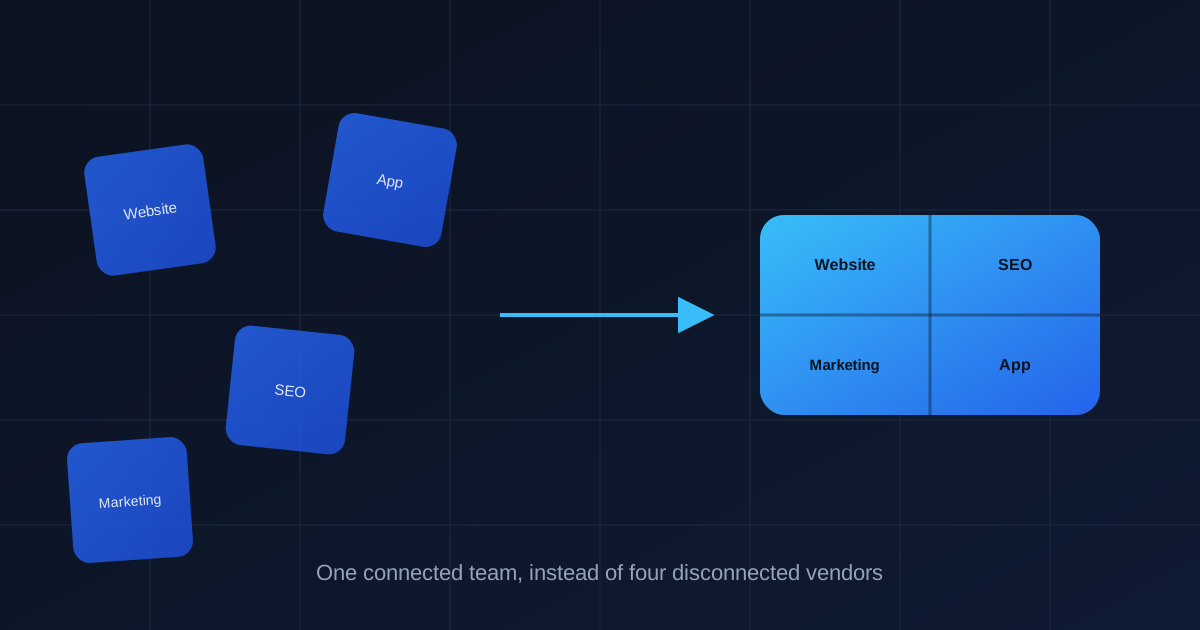
You hired one person to build your website. A different freelancer handles your Facebook and Instagram ads. Someone else maybe a "SEO expert" you found through a WhatsApp group is supposed to be getting you on Google. And your app, if you have one, was built by a completely separate team that hasn't spoken to any of the above in months.
Every one of them is doing their own small piece of the job. Nobody is looking at the whole picture. And when your sales don't move, each vendor points at the other three.
This is normal in Pakistan's digital market. It's also the exact thing that's starting to change and it's worth understanding why, because it affects how much you're spending and what you're actually getting back for it.
A website team that has never spoken to your marketer will build a beautiful site that isn't actually built to convert the traffic your ads bring in. A marketer running Meta ads without visibility into your SEO strategy will happily bid on keywords your organic content is already trying to rank for you end up paying twice for the same customer. An SEO freelancer who doesn't understand your site's technical setup will hand you a list of keyword suggestions that your website, frankly, isn't fast enough or structured well enough to rank for in the first place.
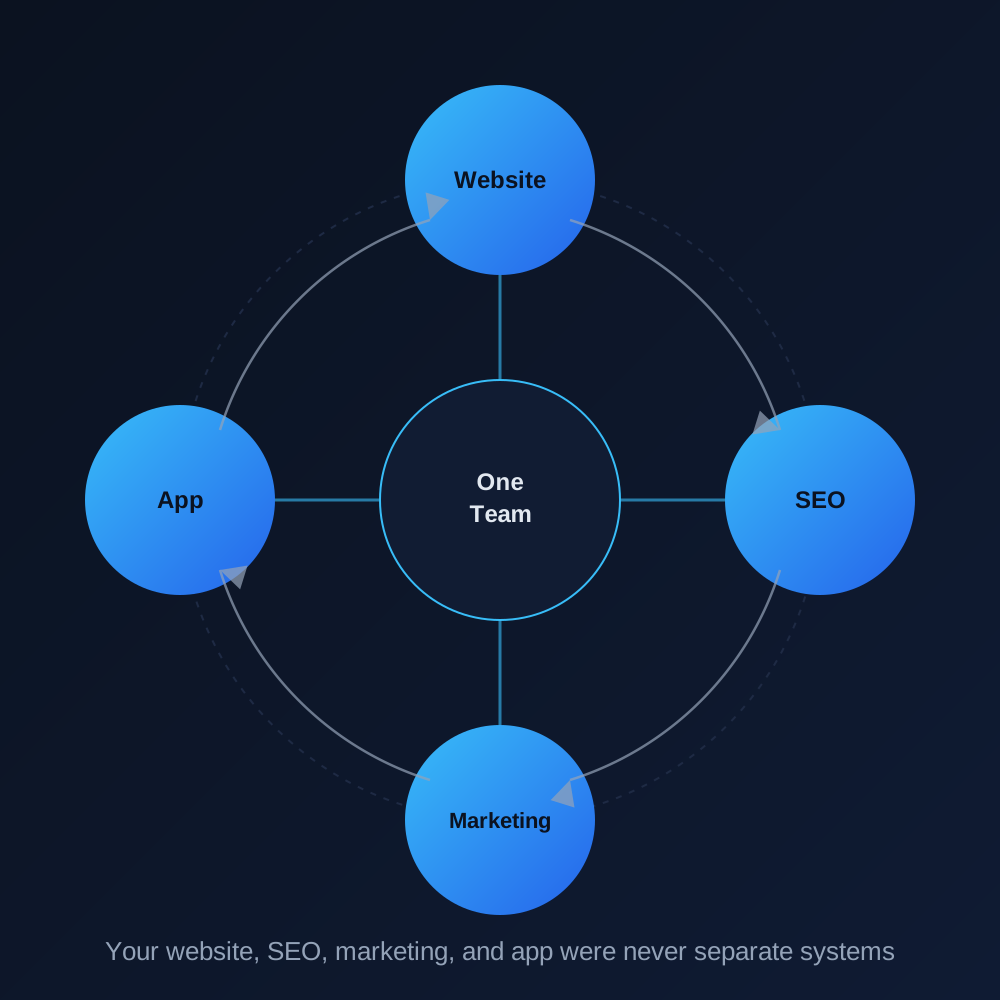
None of these people are necessarily bad at their individual jobs. The problem is structural: your website, your SEO, and your marketing are not separate projects. They're one system. When four different vendors each own one piece of that system with no shared visibility, something always falls through the crack usually your budget.
This is where most of the disconnect actually begins. A lot of businesses in Pakistan build a website first often the cheapest option available and only think about SEO or marketing later, once the site is already live. By then, fixing the foundation is far more expensive than building it right the first time.
A website built for the Pakistani market has to account for things a generic template simply doesn't: how it performs on a real Jazz, Zong, or Telenor 4G connection rather than fibre broadband in a Karachi office, whether JazzCash, EasyPaisa, and Raast are built into checkout from day one instead of patched in later, and whether the whole thing works properly for a bilingual, Urdu-and-English audience. This is exactly the kind of foundational work a proper web development company in Pakistan is supposed to get right before a single rupee is spent on ads.
Skip this step, or hand it to a vendor working in isolation, and every ad you run later is sending paying customers to a site that was never built to convert them.
If you're building or already running a mobile app alongside your website, the same disconnect problem shows up here often worse, because an app that was built in isolation from your website and marketing tends to feel like a completely different product wearing the same logo.
The mistake to watch for is building for a demo room instead of the real market. A lot of Pakistani apps are tested on a flagship phone over office Wi-Fi, then shipped to a customer base that's mostly on mid-range Android devices over 3G or 4G. That gap shows up as crashes, slow loading, and abandoned sign-ups exactly the kind of thing that quietly kills an app's ratings and word-of-mouth before marketing ever gets a chance to bring people back to it. And just like your website, if JazzCash, EasyPaisa, or SBP Raast aren't built into the payment flow from the start, you're asking customers to do something most of them simply won't: leave the app to complete a payment somewhere else.
This is the standard a proper mobile app development company in Pakistan should be building to native iOS and Android, or a well-built cross-platform app, engineered for the devices and networks Pakistani users are actually on, with local payments handled properly from day one. And when the same team (or at least a team talking to each other) owns your app, your website, and your marketing, your SEO content can point people toward the app, your app can reflect the same messaging your ads promised, and nothing gets built twice for two audiences that were always the same people.
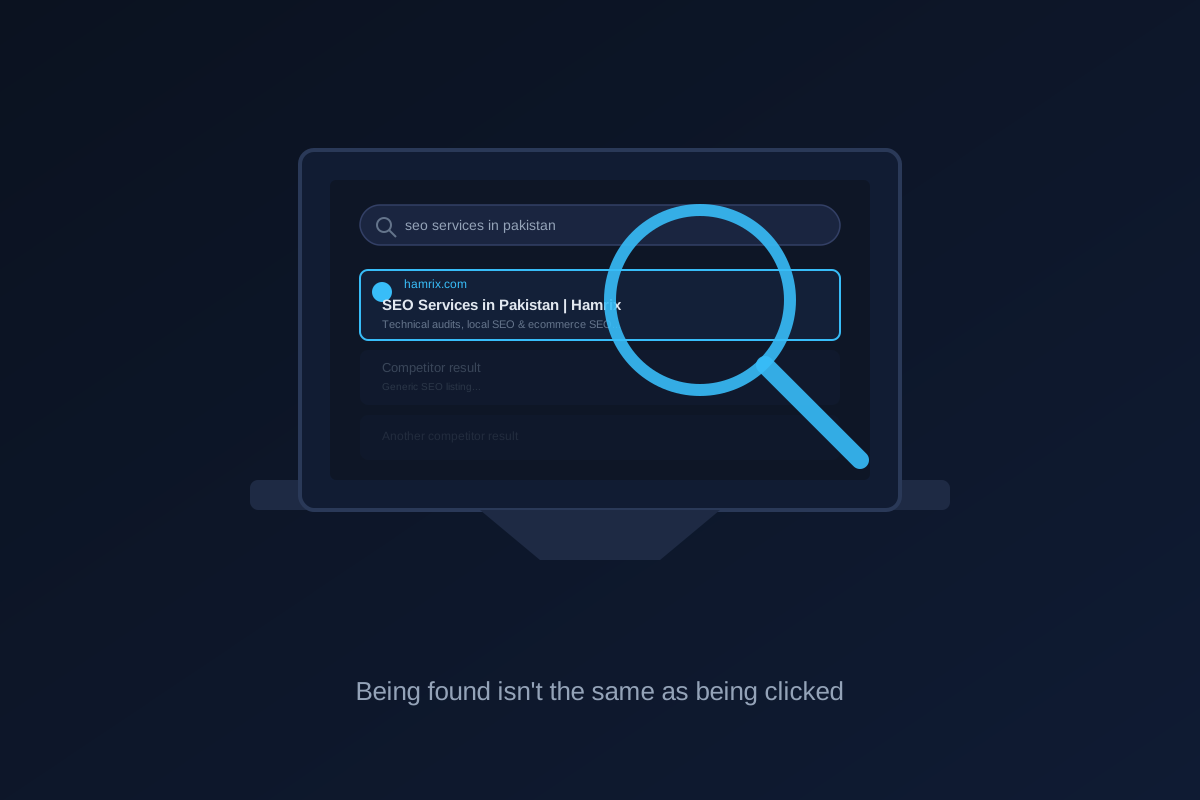
Here's something most business owners in Pakistan haven't been told clearly enough: ranking on Google isn't really about how many keywords you can cram onto a page anymore. Search engines and increasingly, AI tools like ChatGPT and Google's AI Overviews are getting better at understanding what a page is actually about, and rewarding the ones that answer a real question clearly, over the ones that just repeat a phrase fifteen times.
For a Pakistani business, this means the fundamentals matter more than tricks: proper technical setup so Google can actually crawl and index your site correctly, a clear Google Business Profile for local searches in your city, and content that's genuinely useful to the person reading it not written for a crawler. A page trying to rank for "SEO agency Karachi," "SEO company Karachi," and "SEO service Karachi" all at once usually ends up ranking for none of them well; picking one clear target and building real authority around it works far better. This is the kind of focused, technically grounded approach a specialised SEO services in Pakistan team should be building for you not a scattershot list of fifty keywords with no strategy behind them.
And this is exactly where having your SEO, your website, and your marketing under one roof pays off: your SEO team can tell your web team something is technically broken before it ever costs you a ranking. When they're three unrelated vendors, that conversation often just never happens.
Let's say your website is solid and you're starting to rank. The next question is simple: is any of that turning into actual sales?
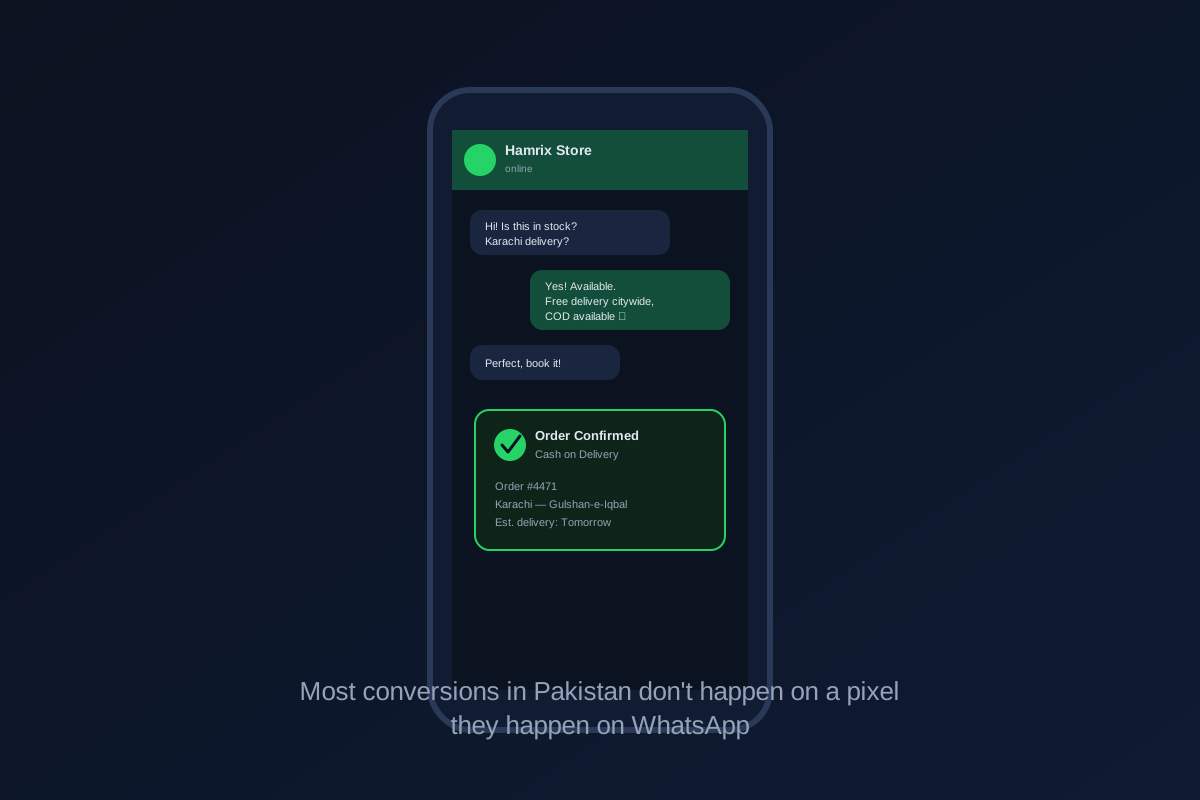
A lot of digital marketing in Pakistan gets reported in reach, impressions, and clicks numbers that look busy on a report but don't tell you whether the spend produced a real customer. A meaningful share of conversions here happen off-platform entirely a WhatsApp inquiry, a phone call, a cash-on-delivery order which standard tracking pixels miss completely unless someone has specifically built the attribution to catch them. And creative that only runs in English is leaving engagement on the table in a market where a large share of the audience responds better to Roman Urdu.
This is the piece a genuine digital marketing agency in Pakistan is supposed to solve connecting your Google Ads, Meta, and WhatsApp activity into one funnel you can actually measure, in rupees, not just impressions.
There's a second, quieter reason this matters, and it's worth being direct about: when your website, your search rankings, and your marketing message are all consistent with each other, it doesn't just perform better it reads as more trustworthy, to real visitors and to Google alike.
A visitor who lands on a fast, well-built site, finds clear and accurate information, and sees consistent messaging across your ads and your Google listing is far more likely to trust what they're reading and that trust shows up in real signals: people staying longer, coming back, sharing your content, actually converting. Search engines are increasingly built to notice exactly that kind of genuine engagement, because it's a much harder thing to fake than a keyword. A site stitched together from four disconnected vendors rarely produces that kind of consistency by accident. A team that owns the whole system, end to end, can build it in on purpose.
Before you hire anyone, it's worth seeing how far you can get on your own. Below are five shorter, ready-to-copy prompts for Claude, ChatGPT, or any AI assistant each followed by a real example of the kind of output you'll actually get, using a sample Karachi clothing store, so you can see the value before you try it yourself.
Example output
Keywords: "unstitched lawn Karachi," "ladies boutique Gulshan-e-Iqbal," "wholesale fabric Karachi." Checklist: confirm mobile load time under 3 seconds on 4G, check Google Business Profile is claimed and has recent photos, verify product pages are indexed in Google Search Console. Content ideas: "How to Style Unstitched Lawn for Eid," "Wholesale vs Retail Fabric Buying in Karachi," "Size Guide for Pakistani Cuts."Example output
Headline: "Karachi's Trusted Name in Unstitched Lawn Since 2018." Benefits: Free citywide delivery on orders over Rs 3,000 · Cash on delivery available · Same-day dispatch on in-stock items. CTA: "Message us on WhatsApp for today's new arrivals."Example output
Headline (EN): "New Eid Collection Free Delivery in Karachi." Headline (Roman Urdu): "Naya Eid Collection Karachi mein Free Delivery." Targeting: women, 20–40, interests in fashion/online shopping, 15km radius of Karachi. Likely conversion: WhatsApp inquiry track it by adding a unique WhatsApp click-to-chat link per ad set so you can see which ad actually drove the message.Example output
Week 1, Instagram, Reel, "60-second styling tip for summer lawn," Thursday 8pm. Week 1, Facebook, Single image, "Customer review: 'Fabric quality is unmatched,'" Saturday 6pm. Week 2, LinkedIn, Document post, "Behind the scenes: how we source fabric," Tuesday 11am.Example output
"Best Fabric for Karachi's Summer Heat" informational intent, builds trust by showing real product knowledge for local climate. "Unstitched Lawn Shops in Gulshan-e-Iqbal" local/transactional intent, captures nearby shoppers actively deciding where to buy.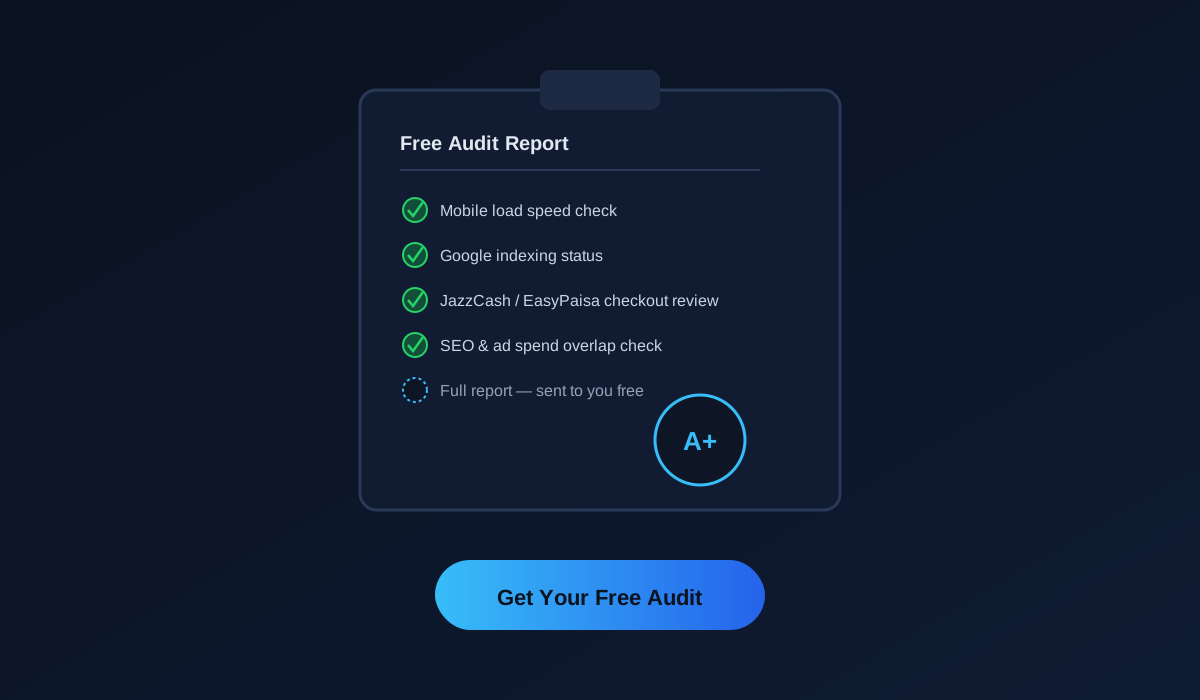
A well-written prompt like these will get you real, usable output in minutes that part is genuinely true, and worth doing yourself first. What it won't do is tell you why your site is slow on a Jazz 4G connection, catch that your JazzCash checkout page isn't indexing properly, or notice that your SEO content and your ad spend are quietly competing against each other. That's the gap between "getting an answer" and "having a system" and it's usually the point where a proper audit is worth fifteen minutes of your time.
You don't need a website guy, a separate SEO freelancer, an ads person, and an app developer who've never once been in the same conversation. Website, SEO, marketing, and your app were never four separate jobs they're one system, and they perform like one when a single team is accountable for all of them.
If you're currently juggling multiple vendors and not sure where the actual gap is costing you, that's worth a proper look before you spend another rupee on ads pointing to a site that isn't ready for them.
Tell us what you're working with website, app, ads, SEO and we'll tell you where the gaps are costing you.
Get a Free Audit →
Full-Stack Developer with 4+ years of experience delivering SEO-ranked, high-performance web architectures and enterprise SaaS, FinTech & PropTech applications. Founder & CTO at Hamrix.
View Profile →